Monday, September 21, 2015

Tell & Draw STories

Here are a few storytelling ideas to inspire and empower your kids to share stories, as well as draw. Everyone can be involved and create.

Tommy's Cat


Peanuts at the Zoo


Shoo Fly...


Sunday, May 17, 2015

Mathematics Creating Eyes to See

Image result for beginners guide to constructing the universe
If you haven't read Beginners Guide to Creating the Universe, please do. It is a fabulous read! This book is about math and seeing it in nature, but what I really love about it is that it talks about math as a language with various layers--three, to be exact. (I will list the layers and the quotes from the book that I picked out to summarize each point)

Secular Math
What is taught in school can be called secular mathematics: adding, calculating, measuring, etc.
This quantitative approach keeps us dull to the potential wisdom that the familiar counting numbers can teach us. When imaginatively taught to people beginning at an early age, mathematics can delight, inspire and refine us. It can make us aware of patterns with which the world and we are made. Instead, math is taught as a servant of commerce, without regard for its basis in nature. It is viewed as a distant subject that instills much more anxiety than wonder and inspiration. Mathematics is seen as outside us, to be occasionally called upon, rather than woven into the fiber of our existence.

Examples: 

  1. My little four year and I have been learning numbers and shapes since he was a baby, right? We have the little Melissa and Doug wood puzzles. He's put them together and since graduated to magnet pieces on a board instead. He can count and do hopscotch, etc. But does it mean anything to him? No. Not just simply doing these things. They are random and without meaning.
  2. I got my son those pattern blocks that you can put together all the triangles and it makes the hexagon shape and comes with parallelograms and squares, etc. I remember loving them as a kid! And something inside me just screamed like a little kids two years ago when I bought them ("I want to play!>") So I spent money on my two year old that Christmas to buy a gift I wanted that he could play with. Otherwise he would've been content with the used toy I was planning to give him (since he doesn't know any different) . He plays with them and loves them and can see how they make patterns and fit together to make other shapes. He's building familiarity with shapes.
  3. When we eat peas from pea pods it's a fun way to learn all the math functions at once. We talk about sets of threes and twos. We do the same thing with our hands by how we put our fingers together or apart with other fingers. It's so fun to ask him how many ways can we say the number five and see him rearrange his fingers (1+1+1+1+1, 2+2+1, 4+1, etc.).

Symbolic Math

The next level is symbolic or "philosophical mathematics." Symbolic mathematics recognizes numbers and shapes as patterns representative of far-reaching principles. Nature itself rests on an internal foundation of archetypal principles symbolized by numbers, shapes, and their arithmetic and geometric relationships.
According to ancient mathematical philosophers the simple counting numbers from 1 to 10, and the shapes that represent them--such a circle, line, triangle and square--express a consistent comprehensible language. The 10 numbers are a complete archetypal source-book. They are the original 10 patents for designs found all through the universe.
This Book of Nature requires first familiarity with its alphabet of geometric glyphs. We are exposed to nature's text in the natural shapes around us, but we don't recognize it as something we can "read." Identifying shapes and patterns and knowing what principles they represent allows us to understand what nature is doing in any given situation and why these principles are applied in human affairs.
Like consonants and vowels--building blocks and growth patterns--numbers, shapes and their patterns symbolize omnipresent principles, including wholeness, polarity, structure, balance, cycles, rhythm, and harmony. Each shape represents a different problem-solving strategy in the cosmic economy.

Examples: 

  1. My four year old gave a talk in Primary about the Godhead. So we used a simple triangle as our visual and I had him teach the primary kids that each corner represented a member of the Godhead and how together they work like one shape and make a strong triangle.
  2. I use the principle of the circle to explain to the kids I teach at the art/gym co-op I'm part of how to be a team and work together and listen to each other. Each time we start class I begin in a circle to remind us of this principle. Those who don't listen or goof off have to leave the group for two minutes before they come back in.
  3. We use Covey's principle of Win-Win to discuss the principle of a line (opposite endpoints). There are two endpoints and two opinions, but as we discuss together we can join those endpoints to a line and come to a common agreement (which actually leads to the principle of a mediator and finding balance...as a principle of three. Regardless, kids can relate to our teaching better if you can pin it to a simple shape like this.)
  4. We actually use the principle of a circle and wholeness a lot whenever we cook and have to stir or blend things together until they are one consistency. I tell my son to listen and to see when he can tell everything is one consistency and therefore done.


Sacred Math
To the ancients the sacred had a particular significance involving consciousness and the profound mystery of awareness. How are you and I aware of these very words and their significance?  Now that you've read them, these words are no longer just on the page. They are within your awareness. Awareness is the ultimate sacred wonder. The study and contemplation of number and geometry can show us, if we look with the eyes of ancient mathematical philosophers, that neither outer nature nor human nature is the hodgepodge it may seem.
Symbolic mathematics provides a map of our own inner psychological and sacred spiritual structure. But studying number properties and intellectually knowing the road map, the symbolism, is not the same as actually taking the journey. We take that journey by finding within ourselves the universal principles these properties represent and by applying the knowledge to our growth. We pay attention to paying attention, directing sustained attention to that which the symbols refer to within us.  When the lessons of symbolic or philosophical mathematics seen in nature are applied functionally (not just intellectually) to facilitate the growth and transformation of consciousness then the mathematics me rightly be called "sacred."
Ancient Egyptian arts, crafts, and architecture perhaps provide the best accessible examples of design that used the symbolism of the number, geometry and nature to teach been exhilarated form of self development to train initiates who knew how to translate the symbolism into meditative exercises that's true sacred geometry camera to be talked through books but must remain as part of the ancient world tradition passed from teacher to pupil, mouth to ear.
Studying contemplating and living in agreement with universal principles is a social responsibility and can be a spiritual path.

Examples: These examples are more personal because it is a personal awareness that comes from your intellectual knowledge and applied knowledge to make you a better person. But I can share a few examples of how I better clue-in to Sacred Math...

  1. Study with Eyes to See: I started reading a missionary copy of the Book of Mormon this year with the intention of seeing numbers 1-7. So I use the colors of the rainbow to mark any number/shape (or corresponding principles of those). At first I didn't have a great understanding of what I was looking for, but the more I practice and seek understanding, the more I find. It's been so great to opening my eyes to clearly see other examples in nature.
  2. Learn from others who are developing "eyes to see." Katie Hansen is starting her Hebrew class tomorrow and she introduces symbols and how to discover them around you. What a great way to really deepen your understanding of symbol and really open eyes to deepen meanings around you. Tresta Neil has her branches of learning that she has to give better understanding about the branches of learning and principles to find in them. Also, TJed did a book Club focus on this book (which I missed, but was probably great) and has a page on their website, I believe, about things you can do to explore this stuff mathematically.

My thoughts...
Needless to say...my homeschooling this year took a different look that the average academic ABC's approach. I spent one full month learning about circles and doing circle activities like making cookies, rolling playdough, circle-time songs, going on a circle scavenger hunt with our circle binoculars, sing songs about wheels on the bus, rolling down hills, playing with circle magnets and the list goes on.
The second month was all about lines. And yes...we spent the whole month reading books about lines and making grids and line patterns and playing with popsicle sticks. There is so much variety.
And that alone gave me greater eyes to see.

I challenge you to do it. Try it. You can make it up yourself and/or reach for others' stuff to be an aid in your journey. There is great stuff out there! You can get together as moms once a week for an excuse to try these fun things. I challenge you to set aside some academics for a trial period in this stuff and then go back to academics with greater depth and meaning. (summer is a great time, since academics are generally on hold anyway)

We need eyes to see, so we can more clearly teach our children simple truths behind all we are learning.


----
After the introduction the author of this book goes on to take you through each of the numbers one through 10 and gives you experiments where you can try to apply and see for yourself how these numbers and symbols are seen in real life. It is worth doing those exercises.

Also, here are some other quotes I liked from the book:
(and my comments from the peanut gallery--ignore if you wish, they aren't as great as the quotes.)

  • " The best effect of any book is that it excites the reader to self activity." Thomas Carlyle

(the same hold true for any teacher....great teachers empower their students to become great--even if that means greater than the teacher. Right parents? Is that not what we wish for our children...to be better than us?)


  • "Numbers are the highest degree of knowledge is knowledge itself." Plato
(This is plato....seriously, he knew something!)

  • "Our biggest failure is our failure to see patterns." Marilyn Ferguson
(giving our kids education should include cross-learning so as to understand simple truths and principles found across disciplines. If they know principles they will see patterns everywhere and be better equipped to teach themselves!)

  • "Living in the world without insight into nature is like not knowing the language of the country in which one was born." Hazarat khan
(I think we can all agree our kids need natuer. But giving them eyes to see in nature will make nature more meaningful so they don't get bored out there)

  • "By the Greeks geometry was held in the very highest honor, and none were more illustrious than mathematicians. We Romans have limited the practice of this art to its usefulness in measurement and calculation." Cicero
(I see a pattern of mathematical understanding lost, similar to apostasy and loss of truths. A call for a restoration!)

  • "The real voyage of discovery consists not in seeking new lands but seeing with new eyes." Marcel Proust
(Amen. Our kids don't need new fancy ways of learning and expensive curriculum out of the reach from the average person. They need real, practical goodness and training from Mother's Who Know.)

  • "Doodling is a valid tool for awakening geometric vision and self exploration. Doodles are manifestation of the unconscious. It is a geometer's method for self-discovery." Michael Schneider
(do your kids journal? Do they have a doodle book or ability to doodle, instead of just write? Both are essential)

Friday, May 1, 2015

The Power of 15: Being Present

I read a blog post the other day from a mom who said she'd try to "be present" with his child each day for fifteen minutes. I like this and think it is valuable to do daily. Now, the "15 minutes" makes sense to me as a good amount of time to practice each day, but the amount of time doesn't have to be that. It is the idea of "a little each day" that seems a great place to start.

The Power of 15 (minutes).

So let's talk about this....
What does it mean to be present? 

I think of when I talk to my four year old and tell him to listen to me while I'm talking to him. I say to  listen with your whole self: eyes looking, ears open, mouth closed, body still, brain focused. So...being present to me, is real, true listening--observation and attention with all your senses and internal workings of heart and mind.

How are we doing as adults?
Are we teaching our kids to listen well, when we haven't learned to do the same?
Are we being present with them?

Granted...we have tons of things vying for our time and attention. But have we tried to prioritize our life, errands, busy-ness and tasks so we can place focus on what matters most? I know I'm constantly guilty of this. And this is why I am writing this post! Hopefully it will clarify for me more ways to focus on my kids. Because this is life! Learning and relearn to focus and simplify and do what matters most. And I can't do it alone. I need help. Do you?

I like this idea of fifteen minutes a day, but I would like to extend that thought into other areas of our life...specifically with relationships and priorities.

What are our priorities?
Or should I say "who" are our priorities? 

Knowing this can help us understand where we need to be present most.
Here's what came to mind this morning as I contemplated this concept of "fifteen minutes."

15 minutes with...

  • God I like to wake up before my kids wake up. This is the ideal. It doesn't always happen. But, when it does....wow! My day goes so much better. My brain actually can do math. My temper doesn't flare at kids not obeying before three strikes..... Not every season for me is this possible (like when I have a baby and am tired all the time, just trying to keep up. Gosh...that seems to be a whole year. hehe). But, when I have that desire and joy, and don't approach it guiltily as a dread-laden task, then my day is infused with purpose and direction. I even bought a pretty study journal that I wrote various things I wanted to study about in the front. When I'm feeling go-getter, I pick a topic i want to study and delve into the scriptures (but I haven't felt that way wince I had my baby a few months ago, so I currently am just going through a cheap copy of the BOM with colors for a specific theme I'm trying to discover.) Sometimes I'll just watch a Mormon Message or read/watch a General Conference Talk. I bought a beautiful wooden box carved with the SLC temple on it and I keep the current cheap copy in it as a reminder to take time each day.
  • Self  I love doing "awareness yoga" first thing in the morning when I wake up (either before or after my scripture reading). This is a fancy made up name for laying down and doing whatever stretches and thinking I want. Talk about stress-free and low-expectations. Who wouldn't want that kind of workout? I do this so I can wake up, become aware of all the little muscles and feelings I have inside myself, and to start warming up my brain to have thoughts about my day and the direction I may want to take. All of this is part of it, but I don't have an outline for things I have to think about or not. I just let stuff start to flow in as I become aware of body, mind and spirit. There are two other times I take with myself too (which, come to think of it may make me seem a little selfish, with this getting three times the 15 minutes. hehe): During quiet time my kids take their nap or do reading (12-2) and I get "me time" to do something fun (which generally is something nerdy and involves reading, writing or researching). At night I like to journal a few thoughts to explore my feelings and unwind them. I don't always do this, but keep my journal by my bed in case I can (and to give my poor husband a break from my incessant chatter exploding from all the stuff going on through my brain!)
  • Spouse Speaking of hubby. We like to get the kids for bed, do our own things, and then connect at 9pm as we start to unwind and get ready for bed. Monday's this is folding landry I threw on the bed. Hehe. Sunday might be our planning session to go over our week so we are on the same page. Friday or Saturday this would be a date or movie or something. In winter it may be a "tea time" to just have an infusion and bite and chat (like Captain Picard on Star Trek). Other times it may be being together, but me writing in my journal and him reading something, or reading a book together. Or a little footrub, etc. The possibilities are endless, but the time frame is a constant. (Again, this is all ideal. Life happens and kids are NOT always angels and sometimes are still talking to themselves and banging on walls with their feet because they are still hungry two hours later, when they should be asleep already! ugh. But...setting it up is the first battle and then dealing with occasional disturbances is the second. One battle at a time, I say.)
  • Child This is the most easy sometimes. We are surrounded by our kids. We have to spend time with them (even more so when homeschooling). We have daily quiet time (12-2, unless life happens at times, which is fine if it's 25%, rather than 99%). I use that time to take one-on-one time to read with Ethan from 12-12:30. This calms him down and gives me that "one" time. My husband gets it in at night for storytime, where he can actually talk to Ethan about his day too. During that time I get my one-on one time in with my 2 year old as I read to her then. And my baby gets it in while I nurse...as I have learned to stop using my ipad during that time and be aware of her more fully.
  • Family Taking time to be all together as a family is great too. This is dinner time for us. Or on weekends having a longer time: a family date or outing, or a Sunday night "Classical Hour" to read a classic together, or Monday Family Home Evening to learn and play together around a religious theme.
  • Nature I sometimes can kill two birds with one stone (though that metaphor might not be the most approriate for this bullet point. Oh, pun intended). For example, if I go out in nature and commune with God, or take that time to journal or draw, for myself. Regardless, I've found that, like good ole Jason Mraz sings...getting back to Earth and putting our hands in the dirt and feet on the ground is very "grounding." Did you know that there have been studies done about the literalness of being barefoot? If you were to go for a run and then come back and take a scan of your knee, there would be red and orange thermal imaging colors around the knee. But, if you were to then go barefoot for 15 minutes after that, the thermal colors would shift from warm to cool colors, showing a decrease in the physical tension and temperature. Wow. Serious. IT's also good if you feel affected by EMF stuff (like telephone wires and electricity from cell phones and such...which really can interfere with our own body's energy). Ok, I'll stop here. But go for a walk or something. :) 

The end. For now.

Tuesday, March 3, 2015

Brain gym Notes

Learning is natural, joyous and continues throughout life. But during life we may get stifled in our learning and developing. "Learning blocks" are an inability to get through stress and uncertainty of a new task. We are all "learning blocked" to the extent we haven't learned to move our bodies. There is a lot of research being done to show the effects of body movement and coordination improving the brains functions and vice versa. The two are very related. This is why many sports and martial arts are starting to incorporate not just stretching warm ups, but also meditation and breathing exercises to warm up the mind and improve the synergy of using both body and mind well.

A relatively new technique being implemented a lot in teaching children and in workplaces is called Brain Gym. This approach is based on the premise (that has been thoroughly researched and proven) that the brain and body connection is important, and that working on one will improve the "block" in the other.

Here are some principles of this method:
1. Draw out: intelligence is inborn
2. Focus: attention follows intention
3. Notice: we learn what we actively experience
4. Move to Learn: growth is the search for balance (move from fragmented state to integrated)
5. Interconnect: each of us is affected by every other

Teachers help the child to... (Notice, choose, participate)
1. Notice how they are learning
2. Recognize whine they have learned something
3. Identify what learning is
4. Imagine what the next learning experience will be

A few quotes:
"Ignorance is the failure to notice (and failure to notice that)."
"Knowledge is experience; everything else is just info. Learning is creating new memories."
"Play is the natural ability to interact sportingly with others and the environment, with no fear of failure or mistakes. It is a practice in kindness--no aggression or competition. It is being in touch with a world in touch with us."
"Purposeful attention is a natural, relaxed search for structure. Reactive attention is a survival-based unequilibrium."
"Renewal or transformation is to move from a fragmented to an integrated state (to bring balance of energy and creativity)."

There are three dimensions of the brain that correlate with the body:
1. Focus Dimension
This deals with front and back parts of the brain, or one's vision/attention/comprehension (ability to identify significant information from insignificant). This area deals with the question "where am I?" Focusing on this dimension helps improve full expression of self to be ready, willing and able to move.  Helpful for those with dyslexia
- front lobe is related to new information or future information
- back lobe/brain stem: old information or the past
Activities: cross crawling, walking/crawling, double-hand symmetrical doodling, arm tracing infinity sign

2. Laterality Dimension
This deals with left and right hemispheres of the brain, or one's ability to communicate (understand whole and parts or symbols and their meanings). Working on this dimension includes the use of eyes, ears and movement, and improves oral and written language.
- left brain: analytic (parts to whole) details, time, sequences
- right brain: gestalt (whole to parts) intuition, synthesis, no time, metaphor
Activities: 

3. Centering Dimension
This deals with the upper and lower parts of the brain or the ability to organize. This area deals with the question, "where is it?" And is needed to have balance between reason/intellect and feelings/emotion so as not to feel scattered. Improving this area brings better organized though, speech and action so one can create deeper associations and connections for deeper learning.
Activities: 


There are four other dimensions listed, that seem good for additional info. But I love the fundamental three as the main focus.

4. Motivation Dimension (attitude)
5. Cranial Movement Dimension (rhythm)
6. Breathing Dimension (power)
7. Body Regulator Dimension (self-management)

Helpful LEarning STrategies:


------------------------------------------
For more brain 101 information click here for a simple post about the areas of the brain.


Thursday, February 26, 2015

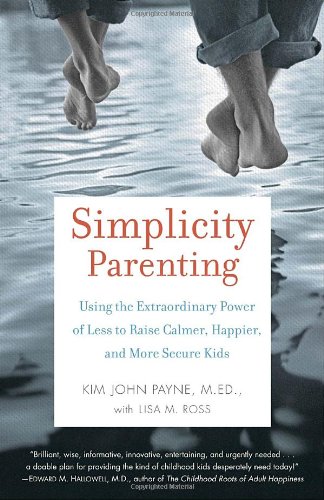
Greenreads: Simplicity Parenting

Do you ever feel kids have too much or are bombarded by too much? 
Media.
Toys.
Junk food.
Choices.
Games.
Books.
Real life adults lead.
Everything!


I love this book written by a Waldorf teacher (educational philosophy geared towards hands-on, natural, rhythmic, artistic, storytelling, simplicity, education, not standardized test-oriented education) and psychologist.

It tells of how children are getting so stressed out and overloaded by information and pleasures that they are in hyper-drive. So she urges parents to simplify their childrens' lives, routines, toys and information received. To in a sense protect our children from getting too much, too fast. "A protected childhood allows for the slow development of identity, well-being, and resiliency. Too much stuff leads to too little time and too little depth in the way kids see and explore their worlds."

She also mentioned every child has quirks, but that when they are stressed (sometimes in ways unbeknownst to us), those quirks turn into diagnosed behavioral problems. "Stress can push children along the behavioral spectrum. When you simplify a child's life on a number of levels, back they come. Behavioral tendencies can be soothed or relaxed by creating calm. We need to simplify in order to create and honor that "calm" for the sake of our children and their divine potential within them. We are here to nuture that potential and help them explore and exerience life in good and natural ways....not just to be entertained by toys, running around stressed from class-to-class, etc.

She walks you through step by step how to simplify in many areas and to create a stable environment in the home by creating daily pockets of predictability for your children and by having less clutter (books, toys, information, etc.). Here are some areas and suggestions (but read the book for more thorough advice and examples).


Toys
We have way too many toys for our children! They don't even play with half of them. "As you decrease the quantity of your child's toys and clutter, you increase their attention and their capacity for deep play."
Keep a few loved toys in clear sight and a few more organized in bins tucked away--reachable, but not always in sight. Get rid of all of the following toys:
1. Broken Toys
2. Developmentally Inappropriate Toys (pack away or donate those outgrown)
3. Conceptually "Fixed" Toys (simple toys allow imagination--not plastic unchangable outfits and TV heroes)
4. Toys That Do Too Much and Break Too Easily
5. High Stimulation Toys
6. Annoying or Offensive Toys
7. Toys that Claim to Give Your Child a Developmental Edge
8. Toys You Are Pressured to Buy
9. Toys that Inspire Corrosive Play (violence)
10. Toy Multiples

Expanding Play from Beyond Toys
Children need to experience (touch, see, feel, do, etc)...not just be entertained. Here are some thoughts for how children can play beyond toys:
Imaginary-Play
Purpose and Industry
Nature
Trial and Error
Social Interaction
Movement
Art & Music

Books
If you're like me you try to collect tons of used kids books. But the author says, "We honor the value of something (like reading) in our child's life by fostering a deep-not disposable--relationship to it." So if you have too much of anything, the child doesn't delve deeply into those things. Picking just one or two books before the child is eight is just fine, with 10 or so other books available as needed. Great books for children are fables and nursery ryhmes because they have rhythm and generally a problem/resolution and principle. Plus, most are based in nature and are very short and simple.
Here are some questions to ask, when thinking about your kids book collection:
Is it developmentally Appropriate?
Is the book based on a product of TV character?
Does it tell an unfolding story or is it "all over the place?"

Rhythm
Rhythm and predictability are what we aim for; predictabilty may be what we can acheive. This predictability help provide security for our children so they feel more happy and calm. She talks about the power of talking to your children more and creating predictability. How often do we run around "living" our lives, but not communicating clearly with our children about what we are doing or what to expect. If we treat them like kids and leave them in the dark. We need to provide pauses to help them know we're about to leave. We need to pick them up face to face and hand in hand, not grab them from behind (which makes them feel insecure and forced) and push them to our next event for the day. Do we help our children see who they are and how they are living and acheive meaning and purpose? Or do they let overwhleming toys, books and media tell them about what life "should" be like? I would suggest that if our children aren't happy, there are inner needs not being met. I always smile when my boy sings, because of the quote "A child who sings is a happy child." And when he seems unhappy and whiny...then I ask myself what I need to do to change my attitude (or stress-level) and how I can better focus on him and simplify.

"Rhythms establish a foundation of cooperation and connection. And relationships are often built in the intervals, the spaces between activities, when nothing much is going on." So don't be too busy.

Also I love the simple dinners built on consistent menus so that consistency is valued more than personal preferences and so that children can be involved to prepare it and clean up together.

Pressure valves: kids need to release steam and energy throughout the day. Ex: right after school and sitting so long...a quiet time might be needed. Or time before bed to slow down and unwind. Storytime is the best example of this and a great chance for parents to connect and help create a picture of the next day for their children. If children don't have these times they have a hard time sleeping at night. Look for opportunities to build a few into your days for your child's sanity.


----------
I stopped taking notes halfway through...so next time I read it I will finish. :)


Tips for Boosting Memory

This is a good little video with some learning tips to improve memory retention. It's the same thing I learned from a speaker at the LDSholistic Living conference I hosted for last summer. So since I saw it twice, I thought I'd actually post the helpful hints. This one is from www.kwicklearning.com.

Here's the acronym he says to remember when trying to learn:

FAST
F - Focus/Forget (be in the moment, focused on what you are learning--or the person you are talking to, if you hope to remember their name. Forget everything else going on around it....all those needed thoughts will still be there when you're done, but you net to let go of other thoughts to focus on the one needful one at hand.)
A - Active (keep your learning active. Don't just stare blankly and absorb, but look intently, keep your mind engaged with postivity and a desire to get something valuable out of the experience)
S - State (sit or stand in the state you would normally do if you were fully focused and excited about what you are learning. You definitely would be in a lethargic state if what you were learning was super exciting)
T - Take Notes (capture facts and words, then create/apply. Make have two columns or have symbols)

I personally use boxes with various symbols in them for the create part that I indicate in the left margin. I like using check marks for a goal I decide to make, ? for questioned posed or that I have now, I draw a little open book for scripture verse that goes along with it, quote marks for a quote, etc.

It doesn't matter what ways you use to take note, as long as the system works for you. So make sure you have a system that helps you categorize and place what you are hearing and applying. If you're not a systems person, maybe this can help you be more of one.

--
He also did an exercise to memorize 10 keys to overcome information overload: boosting brain power to learn quicker.

1.  Diet
2.  Killing ANTS (Automatic negative thoughts)
3.  Exercise
3.  Brain Nutrients
5.  Positive Peers (friends)
6.  Clean environments
7.  Sleep
8.  Brain protection
9.  New learning
10.Stress management

Memory deals with location. So he tells us how to memorize these 10 points listed above by giving them visual location and a connection of walking to each of them.

So imagine going for a walk in your house and find ten different places/objects in your house you walk to in a certain order (ex: start at bed in bedroom and then go to hallway, and then downstairs, etc.). Close your eyes and visualize going from one spot to the next spot. Then give each location an object or action associated with the ten points you are memorizing (ex: for diet, you could imagine a plant on your bedroom (which was the first location). Then do the walk again with the points associated. Then do the exercise again backwards.With each piece of information in a familiar surrounding you should be able to recall each piece of info, and in any order.

This is how I memorize things, but not normally so intense of an exercise. But I will start doing this exercise more for poems I want to memorize and such. The speaker I heard at the conference said his little boy memorized all his 100 lines of a play in one day using this method. Pretty cool, huh?

He summarizes our ability to learn quicker and have greater clarity in our mind as being better for our health and better for making it through trials and vice versa because we can focus on the essentials we are thinking about at that moment and set trials aside for more important needs.

Other points to consider:
1. Knowledge is potential Power: Use what you learn
2. Use location method to place info - Use the 10 points above
3. Questions are the Answer. Question the information you come across: Do you need it? Is it truth, fact, theory, gossip?

Alternative Educational Approach: Thomas Jefferson Education (TJed)

I’ve read a few great books about alternative educational philosophies. I’ve compiled some of my thoughts from this last book I read. (I will then post thoughts on the Waldorf Philosophy and another separate post of a comparison/summary of the two.) So, beware, my notes are choppy. The comparison post will be more polished.


Thomas Jefferson Education: Teaching A Generation of Leaders
by Oliver DeMille

KEY:
Excerpts from the book
Other peoples' quotes from book
My Thoughts

-------
The Essential Question in my mind:
Is the education we are receiving on par with our potential?


Every person you have ever met is a genius.
And greatness is the purpose of each of us.

Two types of teachers: mentors (present) and classic (past)
- Teacher get students attention and starts them on the way and involves them Deeply. Students puts in the work to educate themselves.

Three major types of schooling
1. Conveyor belt education
2. professional education
3. leadership education: 
inspires self-education and ability to think for themselves, based on character

Thomas Jefferson Education Model is Leadership Education
And I would add that so is the Waldorf Method, from a more creative/intuitive approach, but that is another post...


“Teaching, like farming and healing, is a cooperative art. Understanding this, Comenius in The Great Didactic again and again compares the cultivation of the mind with the cultivation of the field; so, too, Plato compares the teacher’s art with the physician’s.”


“…only when teachers realize that the principal cause of learning that occurs in a student is the activity of the student’s own mind do they assume the role of the cooperative artists. While the activity of the learner’s mind is the principal cause of all learning, it is not the sole cause. Here the teacher steps in as a secondary and cooperative cause.”


“Like the farmer and the physician, the teacher must be sensitive to the natural process that his art should help bring to its fullest fruition – the natural process of learning. It is the nature of human learning that determines the strategy and the tactics of teaching.” 
– Mortimer J. Adler -


Individualized Education Phases


  1. Core phase (0-8 years of age): Happy, interactive, confident child naturally playing and working in family setting. The meaning of tasks gains context through experiences with a rich learning environment.
  2. Love of learning phase (8-12ish):  Play at projects and skills which build understanding. Involvement is exploratory and interest driven With time to allow personal expression without negative feedback.
  3. Scholar phase (puberty/12-16): Readiness to apply greater level of effort to personal and academic achievement through a process of commitment and accountability.  Defined responsibilities that are agreed upon. Exposure to variety of materials and ideas in the spirit of passion and excitement for learning. A time to work hard at learning because you love it and to ponder, think, read, write,  listen, debate, analyze and learn. It is the time to lose yourself in study.
  4. Depths phase (16-22): Profound hunger to prepare for on-coming responsibilities and future contributions in society. To acknowledge limitations both personal and in current mentoring arrangement, and to submit to expectations of a mentor at a new and higher level. To network with those who are mission-oriented and involves the challenge of having your grand ideas revealed to be limited or ineffectual with the opportunity for exposure to peers with new and thought-provoking solutions to age-old problems. it is the ideal combination for the years of earlier training and must be individualized.

"Since learning is essentially a process of discovery the teachers Art consists largely in devices whereby one individual can help another to lift himself up from a state of knowing and understanding less to knowing and understanding more. left to his own devices the learner would not get very far unless he asked himself questions, perceived problems to be solved, suffered puzzlement over dilemmas, put himself under the necessity of following out the implications of this Hypothesis or that, made observations and weighted the evidence for alternative hypotheses."
- Mortimer j Adler -


Thomas Jefferson Education Basic Tenets:
  1. classics and mentors
  2. depth and breadth
  3. quality and application

No education is complete or even particularly valuable unless the student uses what he or she has learned to serve the community, family, society, and God.

A good mentor is someone of high moral character who is more advanced than the student and can guide his or her learning

Education makes a people easy to lead, but difficult to drive; easy to govern, but impossible to enslave.

---
Seven keys of great teaching or mentoring
  1. Classics not textbooks: Bible, Shakespeare, etc.
  2. Mentors not professors
  3. Inspire, not require: Force in learning dampens the passion, kills the spirit and destroys the zest and life of learning. Force trains followers not leaders. Inspiring is finding out what the students need and then creatively encouraging them to engage it on their own with excitement and interest
  4. Structure time, not content
  5. Quality, not conformity
  6. Simplicity, not complexity (Read, write, Do projects, discuss--not quick to point out answers or personal feelings....explore)
  7. You, not them (Mentors set the example and are continually learning and pushing themselves. They commit to study and ponder think about it and pay their own price in studying along with.

------------
Teaching Parable: Baby Learning to Walk
  1. Observe
  2. Walk and smile: Try and have mini successes
  3. Totter and look alarmed: run into difficulties and get worried
  4. Fall and cry:  Fail and feel bad
  5. Start over again
Mentors' roles
  1. Smile throughout
  2. Shower advice
  3. Warn
  4. Encourage
  5. Praise
  6. Most importantly...set the example

The Mentor who shares her love for learning and willingness to submit to the labor that is the process of acquiring mastery will communicate the value of persevering through difficulties and trusting that ignorance and confusion must ultimately give way to knowledge and understanding.

You were born with potential.
you were born with goodness and trust.
you were born with ideals and dream.
you were born with greatness.
you were born with wings.
you are not meant for crawling, so don't.
you have wings.
Learn to use them and fly.
-Rumi-


-------------------------------

In Summary:
“A sensible man watches for problems ahead and prepares to meet them. The simpleton never looks and suffers the consequences.” 
- Proverbs 27:12 -


Our Educational system has a problem...is the problem. Too many cooks in the kitchen trying to decide what our children need to learn and how to do that. There are tons of alternative educations out there that are worth exploring.

After reading much, I have come to view my children’s’ education as needing at least these three things:
  •  Inspires students to think for themselves
  • Based on good and true principles/values
  • Encourages their individual greatness (aka God-given potential/talents)


All types of education will change if parents lead the charge. 

What can you do as a parent to help truly educate your children? (regardless of whether or not you homeschool, charter school, public education, etc.)